

Artificial intelligence is transforming healthcare once again. Scientists at the University of Michigan have developed a powerful new AI model called Prima that can analyze brain MRI scans within seconds and deliver results with 97.5% accuracy. This development is being described as a major breakthrough in early detection of brain-related diseases.
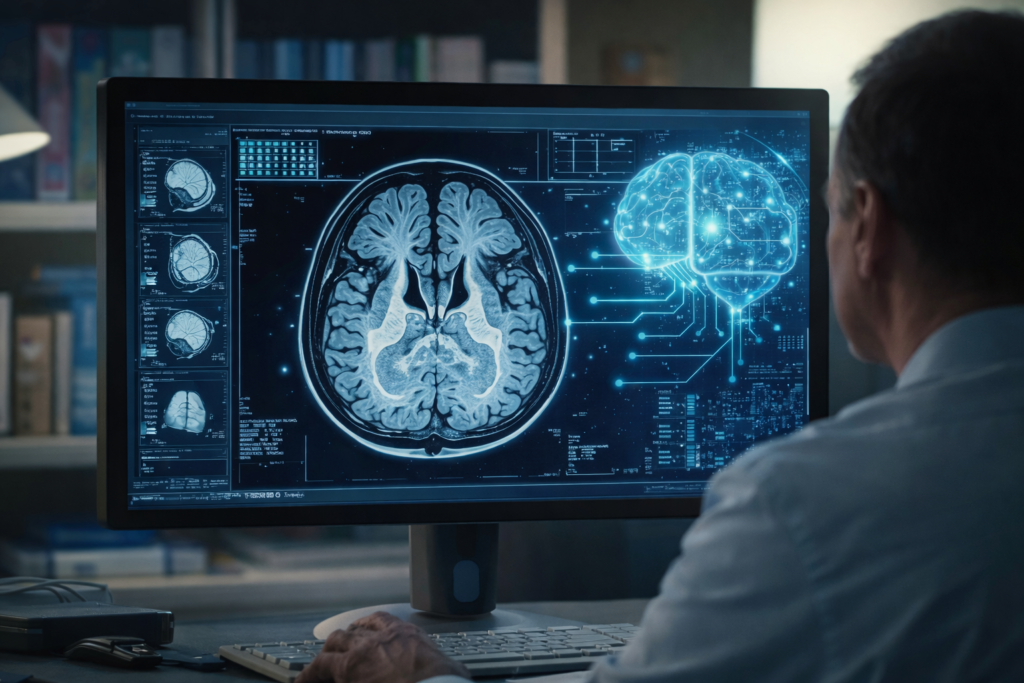
The AI Brain MRI Analysis system has been trained on approximately 2.2 lakh MRI scans, enabling it to detect more than 50 neurological conditions, including brain tumors and strokes. Researchers say the model could significantly improve diagnostic speed and support doctors, especially in regions where specialist radiologists are not available.
How the Prima AI Model Works
The Prima model uses deep learning technology to examine patterns in MRI images. Unlike traditional reporting methods that require manual interpretation by radiologists, this AI system scans and interprets complex data within seconds.
Key capabilities include:
- Rapid processing of MRI brain scans
- Detection of tumors at early stages
- Identification of stroke-related abnormalities
- Recognition of multiple neurological disorders
- High diagnostic accuracy of 97.5%
By training the model on a large dataset of over 2.2 lakh scans, researchers ensured that the system could recognize both common and rare brain conditions.
Why This AI Innovation Matters
Brain disorders often require quick diagnosis. In cases like stroke, even a few minutes can make a difference between recovery and permanent damage. Traditional MRI interpretation may take time, especially in hospitals facing heavy workloads.
The AI Brain MRI Analysis system aims to reduce that delay.
Benefits include:
- Faster clinical decisions
- Reduced waiting time for patients
- Improved accuracy in early detection
- Support for doctors in busy hospitals
- Assistance in rural and remote healthcare settings
Experts believe that such AI tools will not replace doctors but will act as powerful assistants, helping medical professionals make more informed decisions.
Addressing the Shortage of Specialists
One of the biggest challenges in global healthcare is the shortage of radiologists, particularly in rural and underdeveloped areas. Many hospitals struggle to provide immediate MRI reporting due to limited specialist availability.
The Prima AI model could bridge this gap by offering quick preliminary analysis. In places where medical experts are not easily accessible, AI-generated reports can provide critical guidance until a specialist review is available.
For more technology updates, visit BignixHub Tech News:
👉 https://bignixhub.com/category/technology/
Additional research information about medical imaging advancements can be found on the National Institutes of Health (NIH) website:
👉 https://www.nih.gov
What Conditions Can Prima Detect?
According to researchers, the AI Brain MRI Analysis system can identify more than 50 neurological conditions.
Some of the major conditions include:
- Brain tumors
- Ischemic and hemorrhagic strokes
- Inflammatory brain disorders
- Structural abnormalities
- Degenerative neurological diseases
The model has demonstrated strong performance across various age groups and scan types.
Accuracy and Reliability
A 97.5% accuracy rate is considered highly promising in medical diagnostics. However, researchers emphasize that AI should work alongside medical experts.
While the system provides rapid interpretation, final decisions should always involve trained healthcare professionals. AI tools are meant to enhance clinical judgment, not replace it.
The development team at the University of Michigan stated that further testing and validation in different hospital environments are ongoing.
Future of AI in Medical Imaging
The success of Prima highlights a broader trend in healthcare — the integration of artificial intelligence into diagnostic workflows.
Potential future applications include:
- AI-assisted CT scan analysis
- Automated X-ray interpretation
- Real-time emergency imaging alerts
- Predictive disease risk modeling
As technology continues to evolve, AI-powered imaging systems could become standard practice in hospitals worldwide.
The AI Brain MRI Analysis breakthrough marks another step toward faster, more accessible, and more accurate medical care.
Frequently Asked Questions (FAQ)
What is the Prima AI model?
Prima is an artificial intelligence system developed by University of Michigan scientists to analyze brain MRI scans quickly and accurately.
How accurate is the AI Brain MRI Analysis system?
The model has demonstrated an accuracy rate of 97.5% based on testing data.
How many scans were used to train the model?
Approximately 2.2 lakh MRI scans were used for training.
What conditions can it detect?
It can detect over 50 neurological conditions, including brain tumors and strokes.
Can AI replace radiologists?
No. The AI system is designed to assist doctors, not replace them. Final diagnosis should always involve medical professionals.
Disclaimer
This article is for general informational purposes only. The information provided is based on publicly available research updates. AI diagnostic tools should not replace professional medical consultation. Patients are advised to seek qualified healthcare professionals for medical advice and treatment decisions.