

The Gold and Silver ETF valuation change from April 1 marks an important update for Indian investors. Until now, gold and silver Exchange Traded Funds (ETFs) were valued based on international LBMA prices. However, starting April 1, Gold and Silver ETF valuation change will link these funds directly to domestic spot prices announced by Indian stock exchanges.
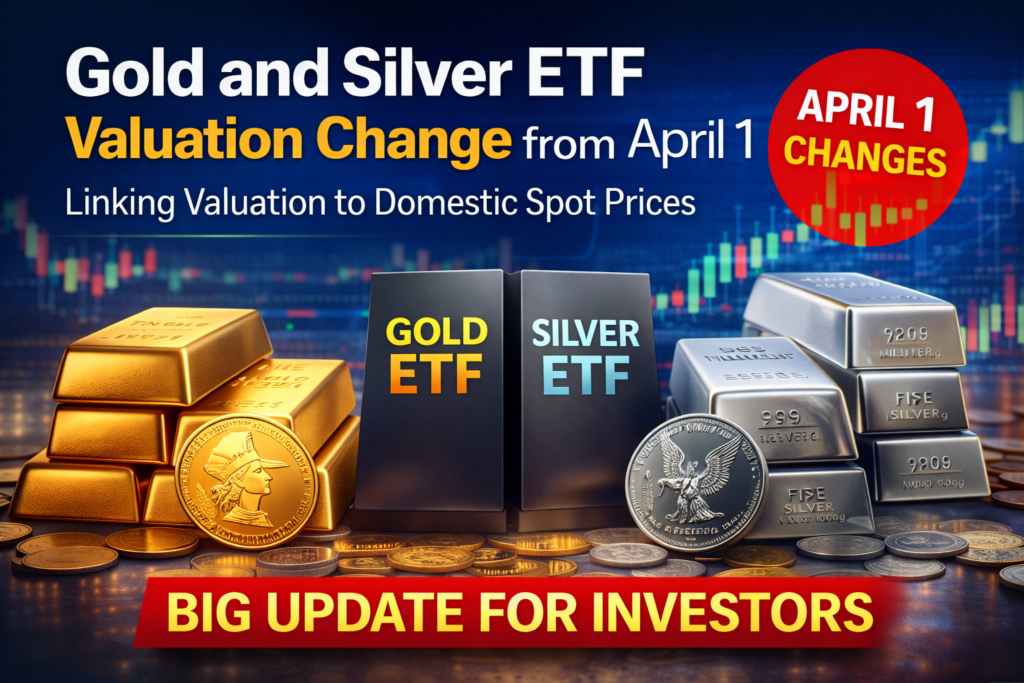
This decision is expected to improve price transparency and align ETF pricing more closely with Indian market conditions. At the same time, SEBI has introduced a 15-minute cooling-off period to reduce extreme volatility.
Let us understand what this means in simple terms.
What Is Changing in Gold and Silver ETF Valuation?
Earlier, Gold and Silver ETFs were calculated using international benchmark prices from the London Bullion Market Association (LBMA). These global prices sometimes differed from domestic Indian market rates due to:
- Currency fluctuations
- Import duties
- Local demand
- Tax structure
Under the new Gold and Silver ETF valuation change, fund values will now be calculated based on Indian spot prices published by domestic stock exchanges.
This means:
- Prices will better reflect Indian market reality
- Reduced mismatch between physical gold and ETF value
- Improved transparency for retail investors
SEBI has also introduced a 15-minute cooling-off period during sharp price swings. This helps prevent panic trading and extreme fluctuations.
Authority references:
What Is an ETF and How Does It Work?
An ETF (Exchange Traded Fund) is a financial product that tracks the price of an asset. In this case, Gold and Silver ETFs track gold and silver prices.
Instead of buying physical gold or silver, investors can buy ETF units through the stock market.
Key features of ETFs:
- Traded like shares on stock exchanges
- No storage cost
- No making charges
- Easy liquidity
- Transparent pricing
Gold and Silver ETF valuation change will not affect how you buy ETFs. It only changes how their price is calculated.
How to Invest in Gold and Silver ETFs
Investing in ETFs is simple:
- Open a Demat and trading account
- Search for a Gold or Silver ETF
- Buy units through your broker
- Monitor prices like regular shares
Minimum investment is usually the price of one unit.
Unlike physical gold, there are:
- No locker charges
- No risk of theft
- No making charges
Investors should track gold and silver rates regularly before investing. For live updates, visit:
👉 https://bignixhub.com/gold-silver-rates/
For broader finance news:
👉 https://bignixhub.com/category/finance/
Average Yearly Returns of Gold and Silver ETFs
Gold and Silver ETF returns depend on the underlying metal price.
Below is an approximate long-term annual average return summary:
| Asset | Average Annual Return | Risk Level |
|---|---|---|
| Gold ETF | 8% – 12% | Moderate |
| Silver ETF | 10% – 15% | Higher |
Gold ETFs generally provide steady long-term growth. Silver ETFs can offer higher returns but with higher volatility.
During crisis years like 2008 and 2020, gold delivered strong double-digit returns. Silver also performed strongly but corrected sharply afterward.
The Gold and Silver ETF valuation change does not change long-term return potential. It only improves price alignment with Indian markets.
Why SEBI Introduced a Cooling-Off Period
SEBI’s 15-minute cooling-off rule aims to reduce excessive speculation.
If prices move sharply:
- Trading pauses briefly
- Investors get time to think
- Panic selling reduces
This improves market stability.
The Gold and Silver ETF valuation change combined with cooling-off rules strengthens investor protection.
Impact on Investors
The new valuation method may:
- Reduce pricing gaps between ETF and physical market
- Increase investor confidence
- Improve domestic pricing transparency
Short-term traders may see slight pricing adjustments. Long-term investors may benefit from better alignment with Indian gold and silver prices.
Will This Affect Returns?
No major change in long-term returns is expected.
Returns depend on:
- Global gold and silver prices
- Inflation
- Currency trends
- Industrial demand
The Gold and Silver ETF valuation change mainly improves pricing clarity.
Expert View
Market analysts believe the move is positive. Linking ETF valuation to domestic spot prices strengthens price discovery and reduces dependency on international benchmarks.
Investors may now see ETF prices reflecting Indian supply-demand conditions more accurately.
Key Takeaways
- Gold and Silver ETF valuation change starts April 1
- Valuation shifts from LBMA to domestic spot prices
- SEBI adds 15-minute cooling period
- Transparency expected to improve
- Long-term return outlook unchanged
Frequently Asked Questions (FAQ)
1. What is the Gold and Silver ETF valuation change?
It is a shift from international LBMA pricing to Indian spot pricing for ETF valuation.
2. Does this affect existing investors?
No. It only changes pricing calculation, not your holdings.
3. Are ETF returns guaranteed?
No. Returns depend on gold and silver market movement.
4. Is ETF safer than physical gold?
ETFs avoid storage risk and making charges but carry market risk.
5. Should beginners invest in ETFs?
Yes, if they understand market risks and invest gradually.
Conclusion
The Gold and Silver ETF valuation change marks a significant improvement in pricing transparency. By aligning ETF values with Indian spot prices and introducing cooling-off measures, regulators aim to create a more stable and investor-friendly environment.
For long-term investors, this update improves clarity without changing fundamental return potential.
Internal Links
For Latest Finance News Visit:
https://bignixhub.com/category/finance/
For Latest Gold & Silver Rates Visit:
https://bignixhub.com/gold-silver-rates/
Outbound Authority Links
Disclaimer
This article is for informational purposes only. It does not provide investment advice. ETF prices and metal prices may change based on market conditions. Please consult a financial advisor before making investment decisions. This article is not a financial source.